From user to architect: Why AI demands us to reimagine our digital identities


AI is often framed as the next step in a long line of technological progress, but its implications run deeper. As tools move from responding to co-creating, our relationship with technology is shifting. This article explores why the AI era asks leaders and individuals alike to evolve from passive users into active digital architects.
At nearly every AI talk or panel I attend, I hear some version of this reassurance: “This is just another technical leap. We’ve done this before—from the steam engine to the internet. It’s evolution, not revolution.” It’s a comforting narrative, but I don’t believe this is true. I’ve been reflecting a lot on my coming-of-age as a user of technology. I was a teenager when the internet showed up in my house—dial-up, clunky but full of promise. Then came e-commerce, Google, the iPhone, and all those apps that let you order dinner, book a flight, and check in on your friends—sometimes all in the same breath. It was messy, fast, and wildly formative. Even with a background in design and development, through it all, I was a “user.” We all were.
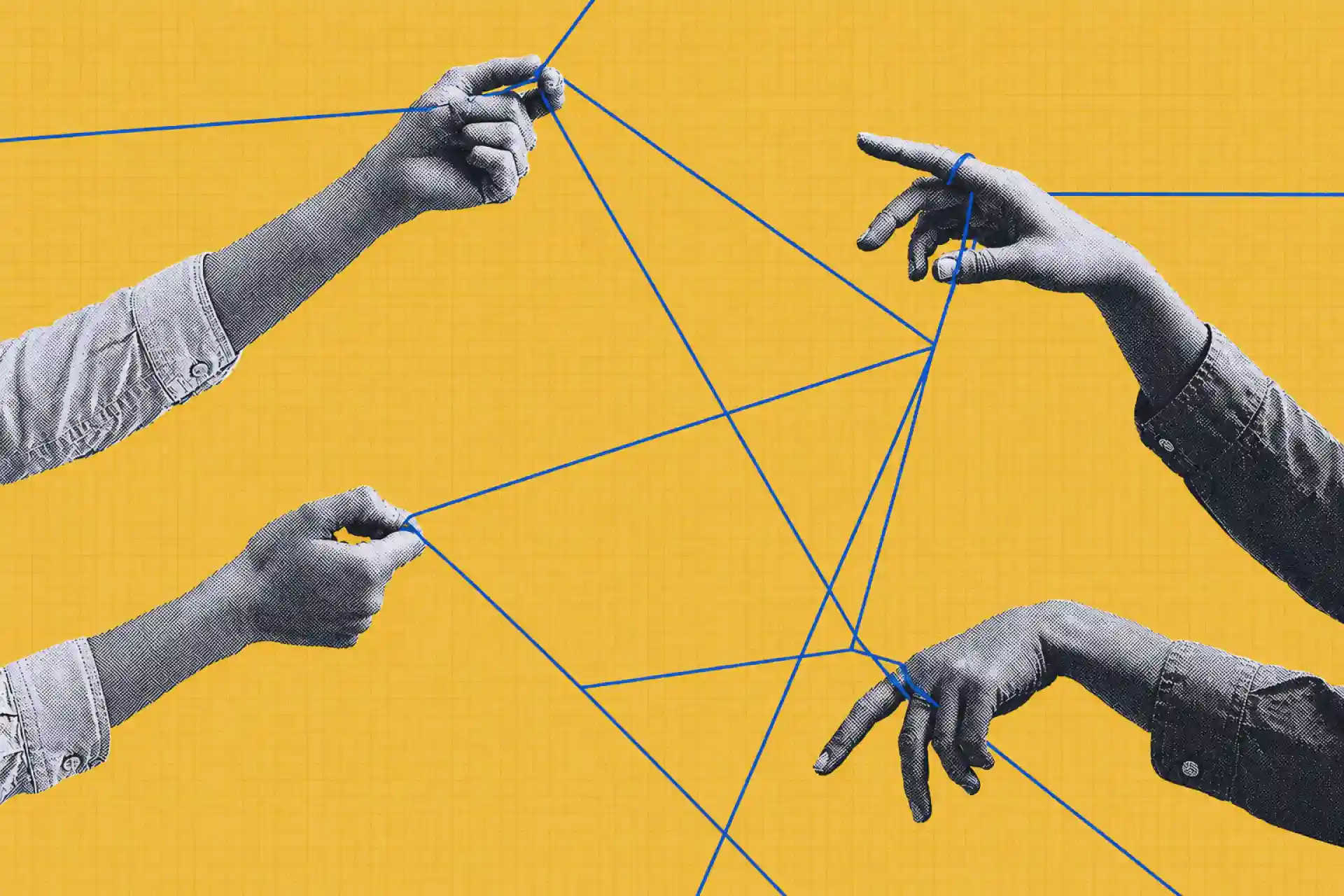
We were taught implicitly to click, not question. To follow instructions, not improvise. To expect technology to serve us reliably, invisibly, and never break (OK, that may be a stretch). The idea that we could shape it? That was someone else’s job, locked behind years of study or exploration. Designers. Developers. Product people. But now, AI is changing that contract. The technology isn’t responding; it’s co-creating. And with that shift comes something quietly revolutionary: we are being invited—maybe even required—to evolve from being a user of technology into becoming a digital architect. Not in the pixel-pushing sense, but in how we author our ideas, our inputs, and our identities.
That role used to feel out of reach—too technical and abstract for most everyday people. But AI has dramatically shortened that distance. Suddenly, the tools to design the future aren’t reserved for engineers and product folks. Some of our most inventive digital designers may turn out to be vibe coders—people who may never have written a line of code but know how to translate imagination into action through language and vision. So the real question is: How do we begin shaping possibilities that have lived only in our imagination—until now?
What mindsets and behaviors are required of “users” now?
The shift from user to architect isn’t just a change in skills; it’s a shift in mindset and a reworking of our muscle memory. It will require us to let go of long-held habits that once served us—such as waiting for tech instruction, optimizing for efficiency (think faster email writing, cleaner workflows, fewer clicks), and deferring to “the tech people.” We are being pulled into more foundational territory.
As my colleague Anthony Quigley wrote, “The domains being touched—language, vision, reasoning, synthesis—are the ones we’ve long held as distinctly human. We’ve built our species’ identity within them.” This implies that it’s more than just a tech upgrade—it’s asking us to reexamine who we are becoming in this emergent AI world. Now, we’re being asked to engage with technology in a very different way—to speak prompts, shape outputs, and imagine what could be, not just interact with what’s already working, tested, and implemented.
As a partner at SYPartners, and someone helping organizations navigate transformation every day, I can’t help but consider what this moment means for leadership. I believe this shift from user to architect is a collective effort, one that requires leaders to be equipped to respond thoughtfully, harness the potential of AI, and support this pivotal transformation of our people. For leaders, this moment is also about modeling a new relationship with technology—one rooted in curiosity, clarity, and creative responsibility. And that begins with small but powerful shifts in how we think, how we design, and how we lead.
Here are the shifts I am seeing and trying to practice with my team:
- Design for meaning, not just efficiency. Yes, AI can do some things faster. But the real opportunity is to use it in service of what truly matters today: amplifying human creativity and growth. Let’s not forget—humans still hold the knowledge, context, and judgment that make the workflows work. For instance, in an AI x org design workshop, we asked, “What should humans still do?” We used this provocation to prioritize areas where human context, judgment, and creativity added disproportionate value.
- Make space for sense-making, not forcing certainty. AI can deliver answers—and ambiguity—fast. This can cause people to think that having the answers is how you win. Leaders can help create shared rituals of reflection, questioning, and direction-setting. For instance, we introduced a “Meaning Check” midway through a design sprint—asking, “What ambition are we amplifying here?”—to shift momentary focus from output velocity to purpose clarity.
- Model learning by doing—not just sponsoring—the work. You can’t outsource understanding. Leaders should engage firsthand—experimenting with prompts, agents, and AI tools—to develop the intuition and empathy required to lead through change. For instance, “Prompt Lab” sessions where executives experiment with AI tools in real time, narrate their reactions, and reflect together, creating shared space for vulnerability and practical literacy at once.
- Work across capabilities, not just titles and roles. Adoption and understanding of AI are best built around complementary skills, not just legacy functions. Hybrid teams can elevate the work—think engineers × ethicists × strategists. For instance, we recently developed our company’s AI principles and best practices through cross-functional use-case exploration, bringing teams together to align on how we use AI through the lens of our values.
- Build to break and learn, rather than pilot for perfection. Real transformation with AI requires a willingness to test, break, and learn. Progress over polish. For instance, creating “Failure Field Notes” after early experiments, documenting what didn’t work alongside unexpected learnings, and normalizing space for sharing productive failures across teams.
The tools are here. The talent is everywhere. The future is still up for grabs. What will we make of it? Because whether we’re ready or not, we are no longer just users of technology. We are the architects now.
More MOMENTUM
What CTOs and CHROs can learn from each other about AI
AI transformation depends on more than new technology. Organizations that bring CTOs and CHROs together to build trust, develop capabilities, and reshape how people work will be better positioned to adapt as AI continues to evolve.

The imagination gap: What it takes for people to imagine with AI
Most organizations are approaching AI adoption as a technology problem when the deeper challenge is imaginative capability. Closing the gap between incremental efficiency and transformational thinking requires people to see AI as a creative partner, not just a faster search tool.
AI, curiosity, and the work we’re quietly losing
As generative AI accelerates productivity, the discipline of curiosity is quietly eroding. The real challenge isn’t speed, but designing work that strengthens judgment, experimentation and leadership.