Winning in disruptive times starts with Culture


Treating organizational culture as a key asset helps great organizations prevail. It’s about more than workplace perks and values posted on walls: A thriving culture emanates from shared purpose, gets engineered into the formal operating system of the organization, and is reinforced in everyday moments as people work, grow, and collaborate.
The conversation about culture’s relative role in organizational success varies like the seasons: It famously “eats strategy for breakfast,” or it’s to be deprioritized while AI and HI wrestle for position. It’s an indicator of financial performance, or it’s just one small component of value. During pandemic years, some HR leaders desperately sought ways to maintain their cultures, while others embraced a fundamental shift as profound as the ones humankind was experiencing. Today, responsibility for human capital is shifting to other functions, leaving the question of who should carry the torch for Culture.
Whether leaders are or are not investing resources into changing, defining, or doubling down on it, Culture exists in their organization. Great leaders recognize it as one of their most powerful assets, which is when SYPartners gets called on to help them optimize it. We describe culture as radiating from the heart, mindset, guiding principles, and mission your people share. There are truths about organizational culture we’ve experienced and continue to help shape alongside C-suite leaders.
Here are a few:
Culture must be thought of as a competitive advantage. This goes beyond its value as a draw for attracting great talent. Visionary strategies, remarkable products, world-class operations—all succeed only when powered by a high-performing culture. Great leaders know this. When organizations align around the right cultural foundation and activate it in ways that endure, they unlock growth and resilience—not just for the business, but for their people, too. The good news is, most organizations already hold this enormous source of potential within: The culture is there, ready to be activated.
It should be fit for purpose. A culture at odds with the purpose and vision of the organization is one of the biggest risks to success. We’ve seen it time and again: The center of gravity of the company’s attention shifts, and the organization struggles to adapt to a different metabolism. This is especially true in companies moving from an R&D or product-development stage to commercialization, or companies facing a major industry or technological disruption, such as the ascendance of AI. Ways of working might suddenly feel out of sync with codified values, for example. It’s the responsibility of leadership to assess cultural health on a regular basis, acknowledge what’s an accelerant and what’s standing in the way, and co-create changes alongside other leaders and teams.
It doesn’t have to be singular. Dig a little deeper into an organization’s supposed one-size-fits-all-teams culture, and it can quickly become obvious that things aren’t quite so pure. This is especially true in an age of consolidation, as companies acquire and merge multiple businesses. We advise leaders to consider reconceiving their organizations as a “house of cultures”—with a single foundation and shared spaces, but unique rooms where different functions and team types practice cultural norms that work for them.
Right now, it’s being disrupted by AI. An SYP client once summed-up Culture simply as “the ways we do things around here.” What those “ways” are undoubtedly shift over time as leadership changes, and technology and culture at large change around us. As AI quickly becomes more pervasive, businesses need to reset many of their ways of working—building a culture of AI that mobilizes the organization to take advantage of AI in ways that align with what they value. As we prototype our way into a workplace future where human and artificial intelligence coexist and complement one another, the mindsets and guiding principles that anchor a culture today might need to be examined and changed.
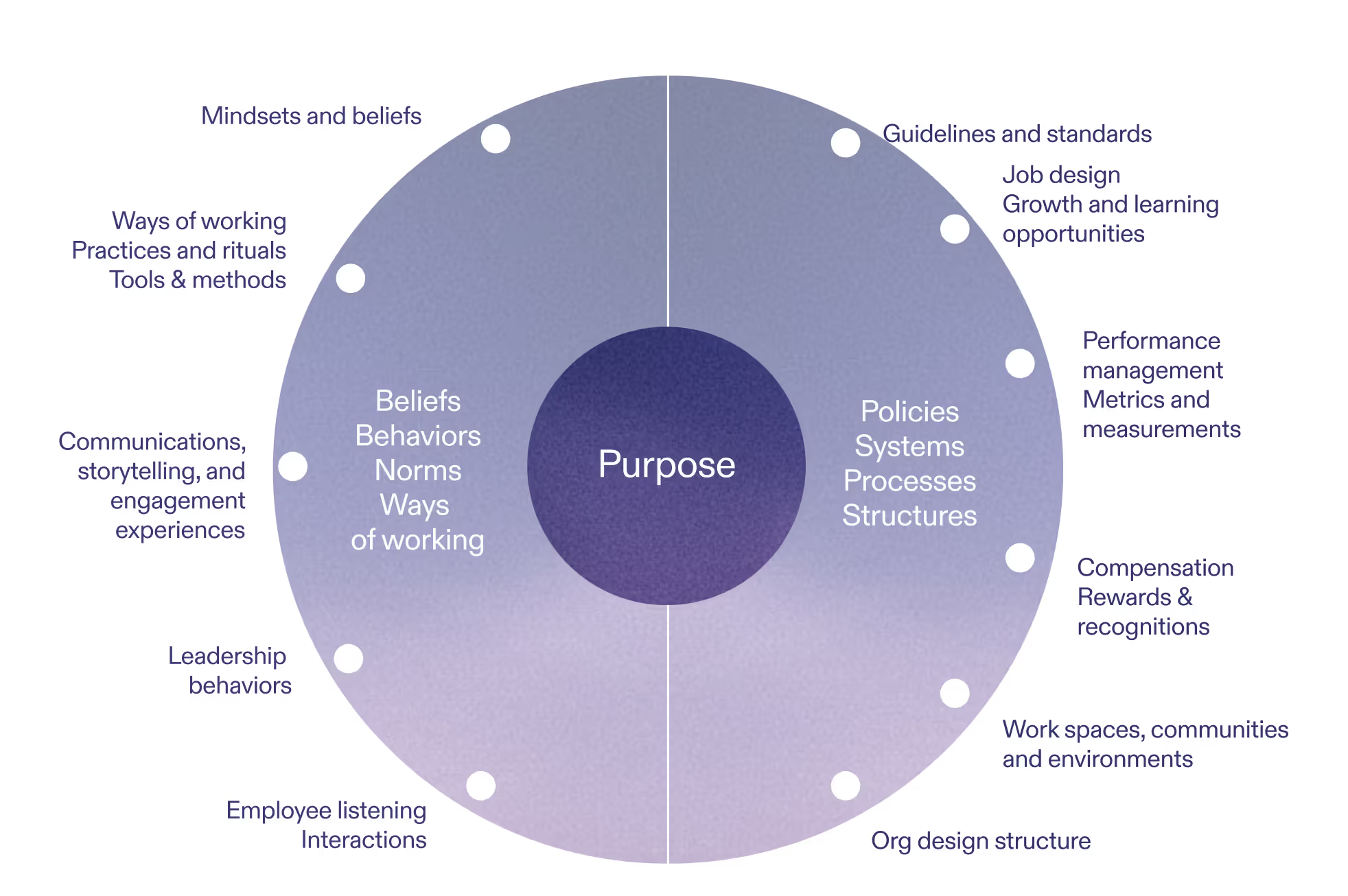
Culture has an architecture. While a lot of culture is intangible—a feeling, a vibe, unspoken social contracts—it can always be described in clarifying ways and deliberately activated across the systems of the organization. Alongside our clients, SYPartners codifies culture in four parts: Purpose, Vision, Values, and Behaviors. Then we bring those things to life through programs, policies, practices, rituals, and decisions made across the organization.
How SYPartners helps shape culture
In culture change work, SYPartners helps clients do four things:
- Listen for truths beyond facts and stats. Culture change falters when metrics outpace meaning. Progress begins by surfacing tensions, patterns, and lived experiences that reveal what’s standing in the way—and what’s ready to grow. We do this through everything from deep listening to ethnography to examining outside forces and their implications for the culture.
- Define the direction to focus leaders’ ambition. Clarity unlocks alignment, and alignment fuels momentum. When values, behaviors, and culture shifts are shaped together, people feel grounded in what matters and empowered to move forward with purpose. We do this through immersive work sessions with leaders and employees to name the cultural shifts they want and need, codify the values and behaviors they commit to adopting, and capture this in a narrative that can serve as a north star.
- Live it together among regions and roles. When teams connect to purpose through shared stories, rituals, and moments, belief builds from the inside out and fuels lasting behavior change. In our work, this happens through everything from publishing a shared employee value proposition to prototyping new rituals, creating manager toolkits that guide teams, and convenings that inspire new possibilities and ways to think and act.
- Sustain through systems that power daily operations. Once values are built into programs, processes, and everyday decisions, culture becomes part of how the organization operates—and how it creates impact at scale. We help organizations create performance tools that align expectations and impact, redesign signature moments in the employee experience to powerfully demonstrate new cultural operating norms, and define culture KPIs that can be measured and tracked.
Decades in, SYPartners has dozens of stories about how our process has given iconic organizations ways to build cultures of competitive advantage. Here are just a few:
When Care becomes Culture
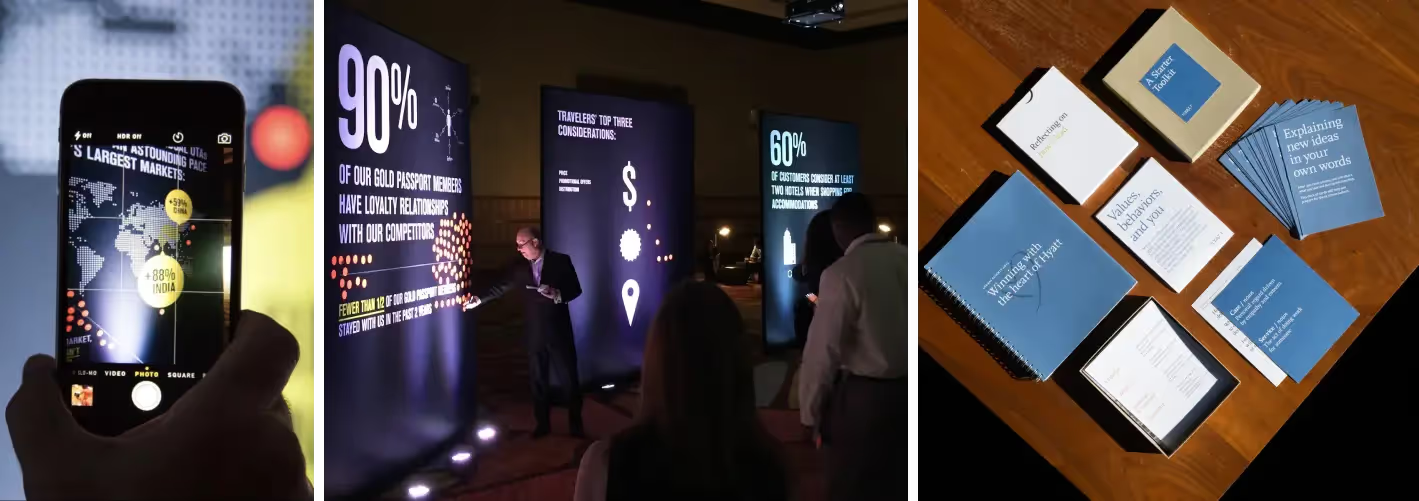
The idea of culture as a competitive differentiator inspired Hyatt to call on SYPartners to help them move away from scripts and standardized ways of acting with guests to new ways of working and caring for them. Part of embedding this shift to Care in the culture happened through a toolkit for hotel leaders that helped bring line-level employees along through quick-hit activities and conversation guides tailored to each brand’s unique needs.
Protecting Culture at scale
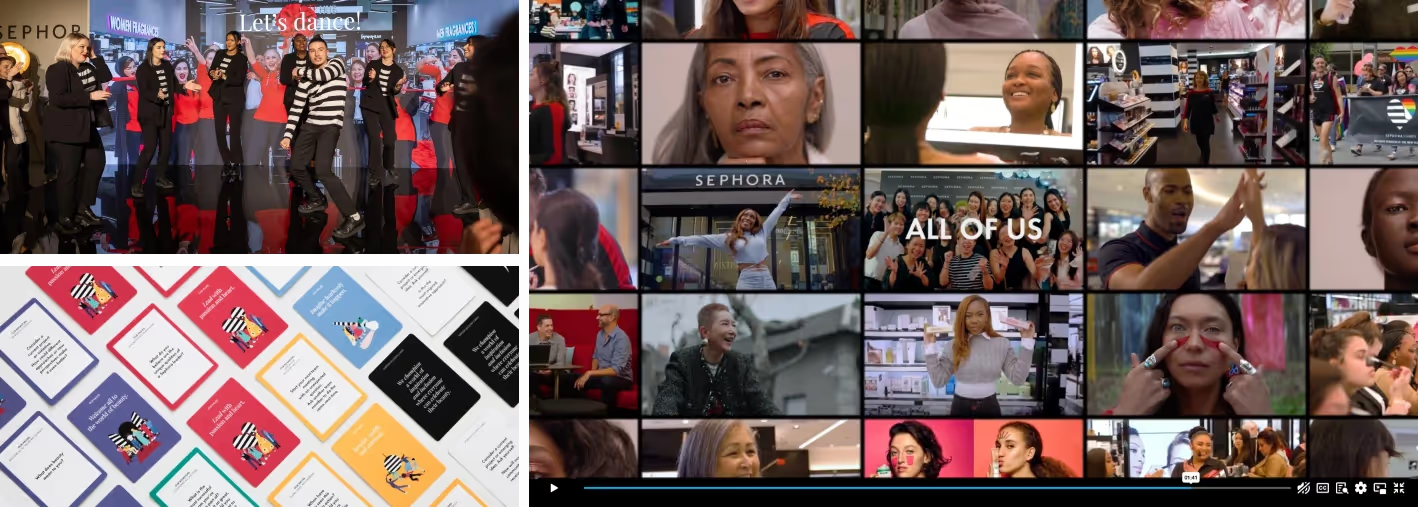
In preparation for massive growth and scale, Sephora knew that they had to protect and preserve what was uniquely powerful about their culture. SYPartners began the work with a global insights tour on four continents to codify Sephora’s differentiators as a business and culture. Then we designed working sessions and events for leaders to explore a new purpose, values, and behaviors and commit to a global activation plan.
More MOMENTUM
The CHRO role has outgrown HR
The CHRO role has expanded with every new disruption to the workforce. As expectations continue to grow, CHROs have an opportunity to move beyond traditional HR and shape the human systems, capabilities, and culture that will carry the enterprise forward.




The hive imperative: Why experience design is a business strategy
In periods of rapid change, organizations need more than efficiency to adapt and perform. Experience design builds trust, strengthens collaboration and helps teams align around a shared vision, creating the collective capacity required for lasting transformation.