How to hybrid


Hybrid work is no longer a temporary fix—it’s a defining feature of how organizations operate. This case study of Harry’s Inc. explores how intentional design principles, clear communication and trust-based guardrails helped turn hybrid work into a cultural advantage, not a compromise.
At an all-hands meeting in April 2021, Andy Katz-Mayfield, the co-CEO of Harry’s Inc., looked at the gallery of faces on Zoom and realized he’d never met half of his approximately 600 employees in person. Over the course of the pandemic, Harry’s had changed in myriad ways. One of the most salient—and a challenge shared across thousands of companies of all sizes and in all industries—was the emergence of hybrid work as a cornerstone of the company’s future, with implications for every part of their business, from culture to operations.
As a consumer packaged goods platform, Harry’s Inc. brands include Harry’s, Flamingo, Cat Person, and Lumé. Katz-Mayfield, along with his co-founder and co-CEO Jeff Raider and Chief People Officer Katie Childers, saw the disruption posed by the pandemic as an opportunity to design a full-scale transformation to a new, permanent hybrid work model that would not only address the current moment but also lay the groundwork for the company’s future. The rollout of a formalized hybrid work model would also serve as a re-onboarding for their entire employee base.
In the years before COVID, Harry’s and transformation consultancy SYPartners worked together on a strategy related to culture and company vision. As a partner at SYPartners, I worked closely with Katz-Mayfield, Raider, and Childers on this before the pandemic. When the challenge of architecting a new hybrid model arose, we revisited our past work to explore adapting it to a new set of realities. We sought to create a path that was both strategic and practical. In this article, our goal is to share the frameworks and approaches we used and to provide a case study with insights and takeaways other organizations may find useful as they navigate the universal challenge of fostering a high-performing culture in a hybrid work environment.
Having worked remotely for more than a year, we recognized the inevitability of hybrid work but also knew that in-person connection would remain important for Harry’s culture. So, we brought a product mindset to our approach, aiming to make return-to-office something people would want—a “pull” rather than a “push.”
Like most leadership teams at this time, it was hard to wrap our heads around all of the variables at play. “It felt like a tangled decision tree we couldn’t quite find our way through,” said Childers. “And so many things were also out of our control. We couldn’t predict how pandemic protocols would evolve. We couldn’t guarantee zero COVID cases in the office even with the best precautions. And we couldn’t make people embrace hybrid or in-person work.”
As a result, we started to think about the hybrid model as a metaphorical playpen rather than a decree. The guardrails we established would provide clarity and comfort to employees while also giving teams and individuals latitude to experiment and make decisions on their own.
In September 2021, Harry’s officially launched the new hybrid work model across their global organization of three offices and 600 employees. A year later, we have a better understanding of the actions and approaches that turned out to be most integral to successful transition and adoption. In particular, three rose to the top:
- Identifying design principles to guide the strategy and design of a new working model
- Focusing on moments that matter most
- Establishing transparent and continuous two-way communication
Data-informed design principles
As a first step, we sought input from employees in all locations, departments, and seniority levels to understand what was most important to them. We ran companywide surveys and facilitated 11 focus groups with 99 team members, approximately 15 percent of Harry’s employee base. From the survey and focus group data, we learned:
- Most people wanted to come back to the office, though not everyone.
- People wanted a gradual shift back into the office rather than a hard switch.
- Tension was arising between flexibility and mandates. Not providing flexibility made employees feel they were not trusted by leadership. At the same time, people craved a degree of certainty and clear expectations to coordinate effective collaboration.
- While it would be impossible to satisfy everyone, people were most concerned about work-life balance, productivity, cross-functional work, and connection.
- It was hard for employees to know definitively what they would want or need in the future, given the disruption caused by the pandemic.
After reviewing the feedback, there was consensus among the Harry’s executive team that employees wanted the company to enact a hybrid model.
“But that didn’t mean it was a straightforward decision,” Childers recalled. "It was tricky to navigate potential tensions in what we were hearing or feeling from the team. For example, a desire for both connection and flexibility can be inherently in tension, because coordinating days reduces flexibility. We leaned into transparency and understood that not everyone was going to be happy with where we landed."
Our team then gathered a diverse set of leaders from across the company to imagine what hybrid work could enable at its best. Coupled with data from previous surveys, this work helped us prioritize safety, clarity, fairness, connection, and productivity. We refined these priorities into design principles that guided our decisions throughout the process.
- Does it put safety first? First and foremost, we prioritized safety and employee comfort around risk. This led us to hire an epidemiologist, increase safety protocols (e.g., air filtration, PCR testing offered 3x per week), and run fireside chats to share the latest COVID-related data and information.
- Is it fair and inclusive? We designed our process to be collaborative with a broad segment of Harry's employees so we could listen deeply and create equitable experiences across personal identities, roles, geographies and needs. We ran extensive surveys and then shared back insights and how they were used in decision-making. We also held numerous testing sessions to help us iterate the tools we created.
- Does it foster connection? We embraced the value of building relationships and community—and sought to do so in a way that activated company values and fostered moments of delight. We revamped day-to-day work processes and tools, adapting those that could potentially feel exclusionary to remote workers, such as onboarding, and made sure to create hybrid moments of connection in addition to those that happen in person.
- Does it create clarity? There was a lot to process for employees, so it was important to create transparency around decision-making, including making information easy to use. We wrestled with how much to mandate at the company level and how much to leave open to teams. Ultimately, we decided some companywide guardrails were needed to create clarity and fairness (e.g., setting standard working hours, a loose expectation of being in the office two to three days per week), but tried to keep mandates to a minimum.
- Does it support productivity? While we set some companywide parameters, we largely entrusted teams to determine how to best enable effective individual and collaborative work among themselves.
Through 1:1s and a weekly briefing at the leadership team meeting, the people team worked with Harry's executives to align the design principles with Harry's current culture, as well as their ambitions for the future.
Clarifying design principles is a foundational step, one that is especially important in urgent, consequential situations. Design principles reduce the risk of getting off track in the midst of competing concerns, and they provide clarity for prioritization—especially for executive teams. They help guide decision-making and provide a bulwark against internal misalignment. By identifying what's most critical for the greatest impact, design principles focus efforts and keep everyone on the same page.
Moments that matter most
Identifying the right moments to focus on first can facilitate a smoother, faster and more successful transition.
Using the insight from surveys and focus groups, we identified the concerns and pain points that had the greatest impact on individuals (burnout from blurred boundaries, commute time, loss of flexibility with a rigid nine-to-five schedule, etc.), teams (lack of clarity into who would be in the office when, meeting overload, etc.), and the organization (lack of shared communication norms, uncertainty about how and when to gather in the office, etc.).
We then zeroed in on the moments that were most important for inclusion, a key cultural pillar that was most at risk of being eroded in a hybrid work environment. Three moments came up again and again:
Moment 1: Setting sustainable schedules
Working together in an office offers helpful cues as to whether someone is available—cues that don't exist in a hybrid environment. Our team decided to use our calendars as a proxy and introduced three new "types" of time as a method for communicating when and how people are working:
- "In the Office" lets people know that they can find you in person
- "Heads Down Time" signals deep, focused work time
- "Golden Time" protects personal commitments that fall during the workday.
We encouraged people to book these types of time on their calendars, and had senior leaders model the practice to drive adoption.
In particular, "Golden Time" was a huge success. It gave everyone—regardless of position or level—permission to hold commitments on their calendar without having to explain why, which resulted in greater equity. A child's soccer game is just as important as a therapy appointment. If someone's Golden Time created a challenge for their team, managers worked with the employee to identify a solution.
"Flexibility is the #1 thing people want," said Childers. "We saw that in every survey or discussion—but it means different things to each person so it's really hard to address it at a corporate level. The unlock for us was giving individuals agency and the ability to figure it out on their own, and then make decisions as a team. Golden Time was a powerful signal and people were floored that we cared."
Moment 2: Clarifying norms and expectations with a re-kick-off workshop
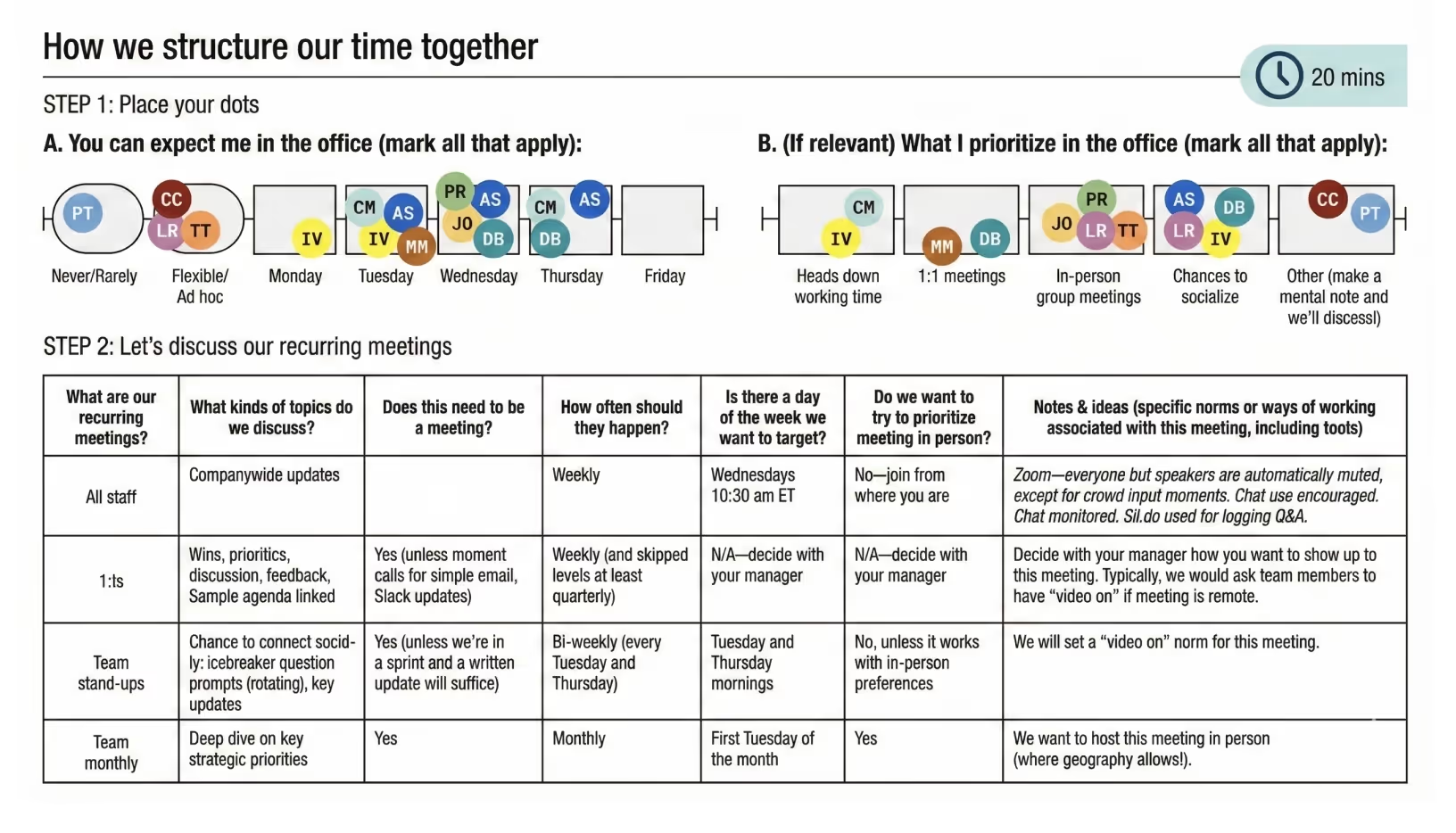
For teams, we introduced a new ritual: the re-kick-off. The 90-minute workshop, facilitated by leaders, centered around a team conversation about collaboration norms—including communication, ways of working and meeting times. These discussions created an opportunity to support individual flexibility, underpinned by clarity around expectations.
Team leaders were trained on how to run these sessions, and they were given a detailed facilitator guide and slides designed to capture their "Team Agreements." We cascaded these re-kick-off meetings through the organization over four weeks, with the leadership team doing theirs first, then running it with their direct reports, and so on. Because of this approach, managers got to experience the re-kick-off as an individual employee before being asked to lead their teams through it.
As Childers noted, "It was amazing how little of that sharing had gone on about remote versus hybrid and which days. From a flexibility perspective, we didn't want to have to mandate ways that teams should work. We wanted to enable them to create what worked best for their team. Teams that invested here—and leaders that took a clearer approach to how their team should function—operated a lot more effectively."
Moment 3: Running inclusive hybrid meetings
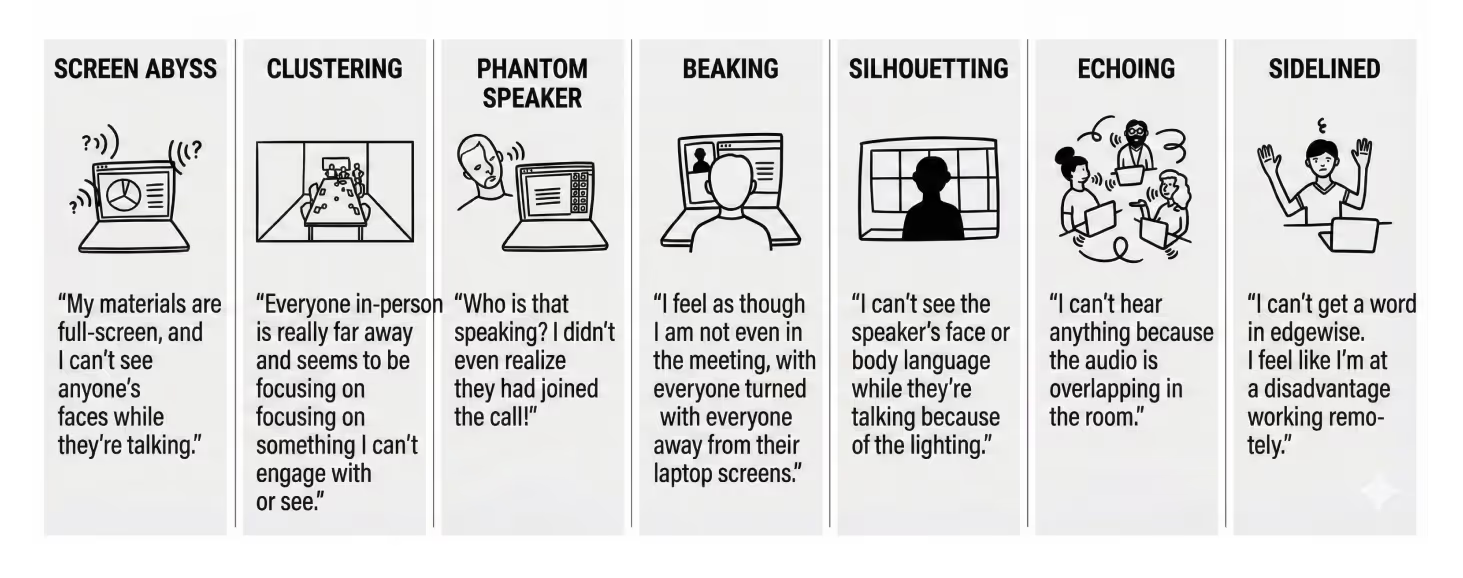
Harry’s introduced four companywide meeting norms:
- One person, one screen
- Digital-first experiences
- Moderator mindset
- End the meeting when the video ends
Clear, transparent communication
Throughout the process, Harry’s emphasized transparency by sharing survey data, decision rationales, and ongoing updates across multiple channels, while creating space for employee feedback and dialogue.
The bottom line
Harry’s hybrid working program resulted in greater autonomy, democratized governance, and more inclusive ways of working. A year after rollout, employee surveys showed strong agreement that the model felt fair, flexible, and supportive of connection. The company’s approach to hybrid work became a meaningful signal of trust and values—one that continues to shape its future.
More MOMENTUM
What CTOs and CHROs can learn from each other about AI
AI transformation depends on more than new technology. Organizations that bring CTOs and CHROs together to build trust, develop capabilities, and reshape how people work will be better positioned to adapt as AI continues to evolve.

The imagination gap: What it takes for people to imagine with AI
Most organizations are approaching AI adoption as a technology problem when the deeper challenge is imaginative capability. Closing the gap between incremental efficiency and transformational thinking requires people to see AI as a creative partner, not just a faster search tool.

AI, curiosity, and the work we’re quietly losing
As generative AI accelerates productivity, the discipline of curiosity is quietly eroding. The real challenge isn’t speed, but designing work that strengthens judgment, experimentation and leadership.