Developing a strategy is a rehearsal of the future


Strategic planning today requires executive teams to imagine multiple possible futures and the moves to get there, and play out the implications of each before committing. In an environment defined by volatility and rapid change, strategy can no longer rely on fixed plans alone. Grounding strategic choices in an organization’s Purpose and Vision helps leaders align decisions, investments, and priorities—even when the path forward must adapt along the way.
Strategy is the plan for making a vision real. It breaks down that audacious goal into actionable steps that can be measured and adjusted. It sits above a list of tactics, can be measured by KPIs, and above all needs to feel congruent to your stakeholders: They should be able to easily draw connections between the strategy and the organization’s declared purpose and vision.
The transformation strategy work SYPartners does alongside our clients charts a path to performance and impact—this is table stakes. What’s different is how we go about it:
First, we face the fact that it’s a dynamic exercise for an impermanent world. Gone are the days of relying on five-year plans and long-term transformation agendas. The global pandemic humbled every executive who was holding tight to their rigorously designed, multiyear strategy map. Of course, leaders are still responsible for strategic direction. But in the process of mapping out a strategy, they need to account for variability and volatility, and explore multiple options—even if simply as a thought experiment—to future-proof the strategy they do pursue and mentally prepare for sudden shifts in conditions. Scenario planning, complexity mapping, and decision design are part of SYPartners’ strategy work today. We help ritualize strategic reviews for our clients and identify and teach leadership behaviors and mindsets to build resilience in an environment characterized by the hard lessons of disruption.
Strategy starts with Purpose. When building their strategy, too many organizations start by itemizing initiatives and actions. SYPartners asks clients to first make sure they’re clear on the why before jumping to the what. We begin with purpose: What is the organization’s unique reason for being? We look at Vision: What does the organization intend to accomplish, no matter how audacious, and by when? If neither of these are in place, we work with clients to develop the purpose first before launching into Strategy.
It’s anchored in a handful of bold moves. Relative boldness may vary; the point is that leaders need to focus the organization on three or four concentrated efforts that help people see what matters, what’s new, and—often most important—what’s no longer a priority. Moves that don’t progress a company’s purpose or vision shouldn’t require the attention or resources of the organization. SYPartners leads executive teams through a process to elevate and distinguish those moves from one another (see Starbucks example at the end of this article), then calibrate their level of ambition and boldness.
It forces alignment and prioritization. The bold moves serve as a frame for strategic action. At this point in the process, leaders do the hard work of deciding which initiatives are truly going to advance the strategy. Alignment over agreement is the goal here. When it comes to communicating with and guiding their teams, it’s important that executive teams go forward after these sessions with common resolve.
It tells a story. Capturing everything in a single framework that makes the connection between purpose, vision, and strategic moves can provide a powerful snapshot of what matters to an organization. It’s essentially the outline of a narrative about this moment in the organization’s history. As part of the development process, SYPartners designs storytelling moments and artifacts that make the socialization of the strategy especially resonant and powerful for different stakeholders. For employees, this helps build belief that they’re doing the right work together, for the right reasons—in service of something worthy.
The process is accompanied by leadership inquiry. Strategies are where inspiration takes a back seat to tactics. Some leaders show up strong in the envisioning and rallying moments, then lose momentum or falter as the strategy becomes real on paper. Both types of leadership are needed, of course, and they don’t have to come from the same person. We make sure to spend time with individual leaders and create space for conversation about the more existential questions they might be asking themselves as a plan takes shape: Can we pull this off? Do I have the right people around me? Is the challenge and the plan too daring? Are we prioritizing the right things?
Decades in, SYPartners has dozens of stories about how our approach to developing strategies has accelerated leadership alignment and performance momentum. Here are just a few:
Alignment at speed
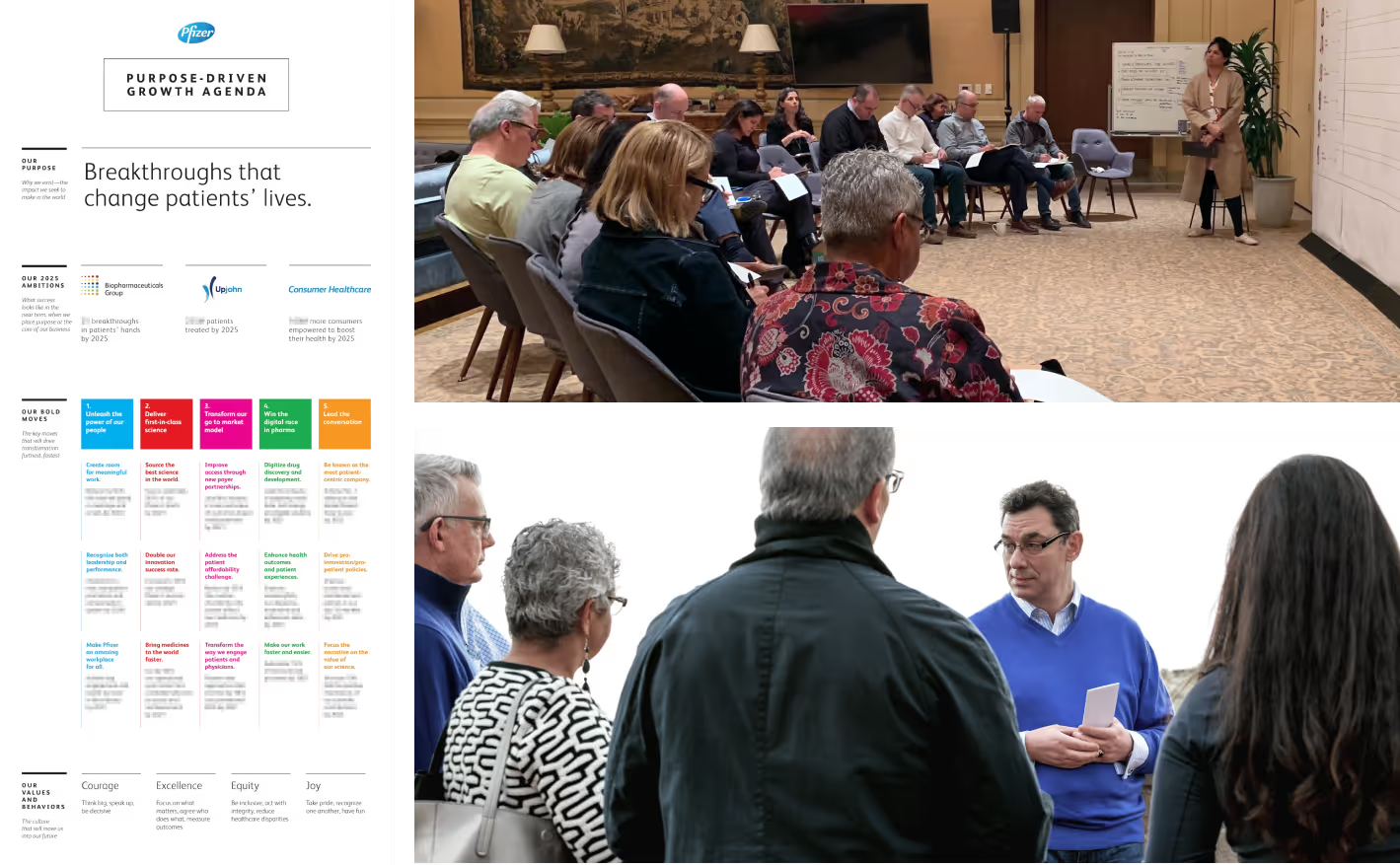
One of the first moves CEO Albert Bourla made at Pfizer was to create a purpose-driven growth agenda. Bourla credits aligning the global organization behind a singular idea and a clear, focused strategy as critical to Pfizer’s coordinated, agile, world-changing rollout of the COVID-19 vaccine just months later.
Seeing the moment, claiming the future
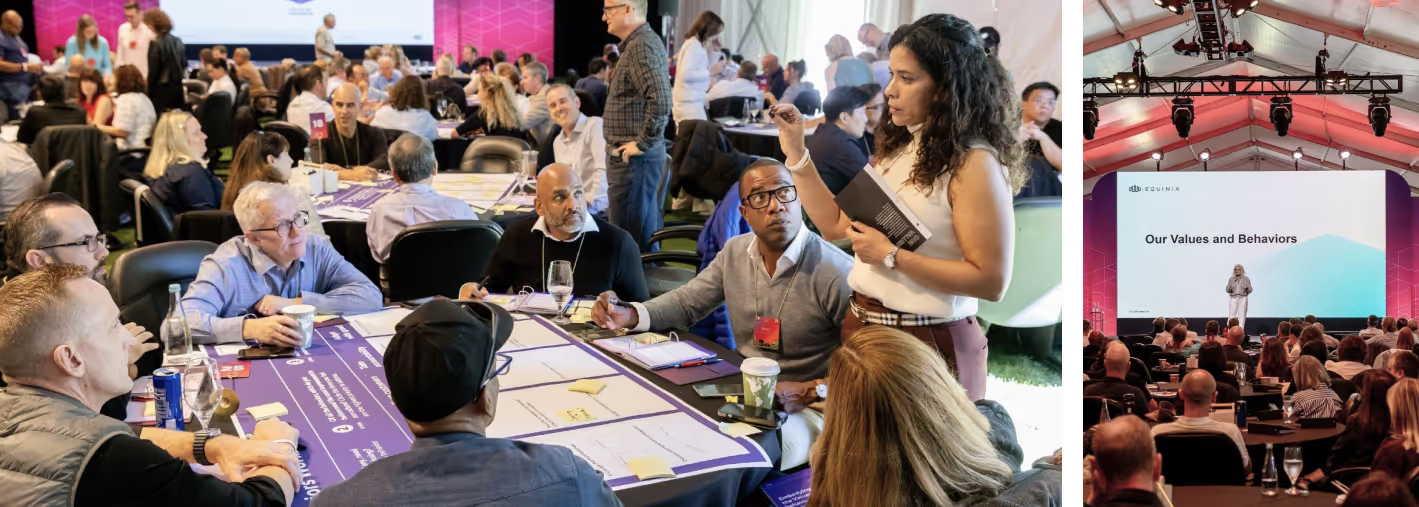
When the rapid rise of cloud and AI computing revealed new possibilities and exposed gaps in the ability to capture growth, Equinix needed a unifying vision, strategy, and culture to fully leverage these opportunities. SYPartners helped the new CEO build a case for change and boldness, then enroll leadership in what pursuing an ambitious future could look like through immersive, experiential storytelling.
Many businesses, one strategy
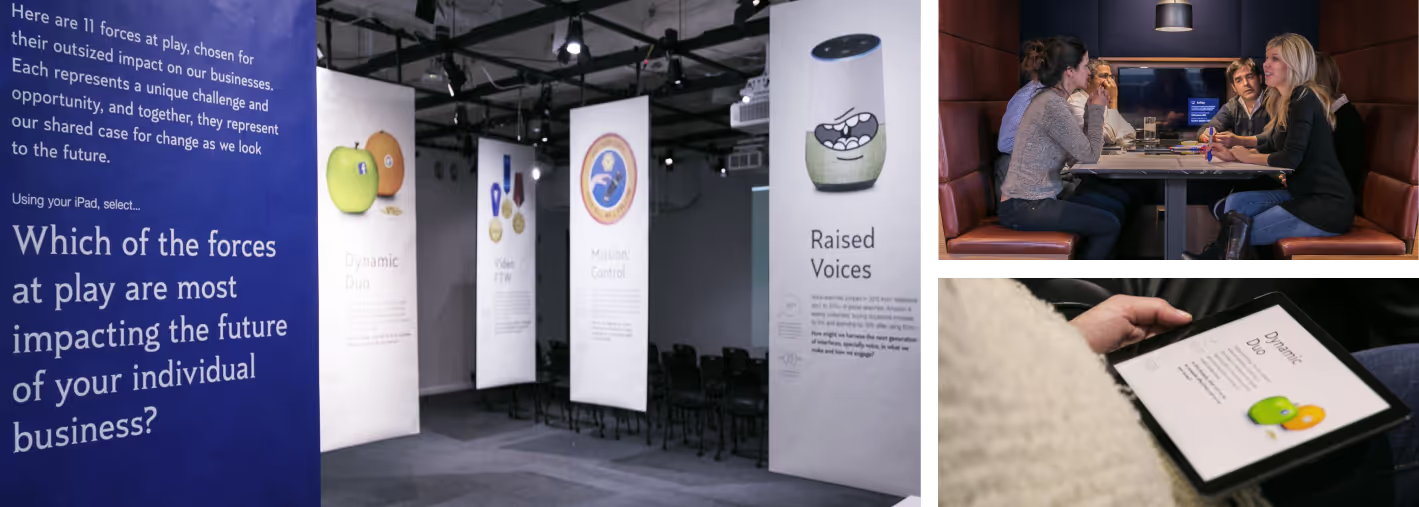
SYPartners worked closely with NBCUniversal’s digital business leaders to build a shared narrative and strategy in which each business could see itself. This included a series of work sessions with a core set of executives to unpack the challenges and opportunities of bringing together such a diverse collection of businesses.
More MOMENTUM
Leading without a playbook starts with Vision
In moments of uncertainty, speed without direction creates fragmentation. A clear vision aligns decisions, investments and imagination around a shared future. When old strategies no longer apply, vision becomes the anchor that helps leaders create the path forward rather than chase it.

Developing a strategy is a rehearsal of the future
Strategic planning now demands the discipline to imagine multiple futures before choosing a path. In volatile markets, fixed plans fall short; grounding strategy in Purpose and Vision keeps decisions, investments and priorities aligned, even as conditions change.How to manage complex stakeholder interests? Think like a designer
As stakeholder capitalism reshapes how companies create value, leaders face a growing challenge: balancing complex, often competing demands. Managing stakeholder interests requires more than statements or promises. A design-led approach offers a practical way to make better decisions, align strategy, and build trust across stakeholders.