The CHRO role has outgrown HR


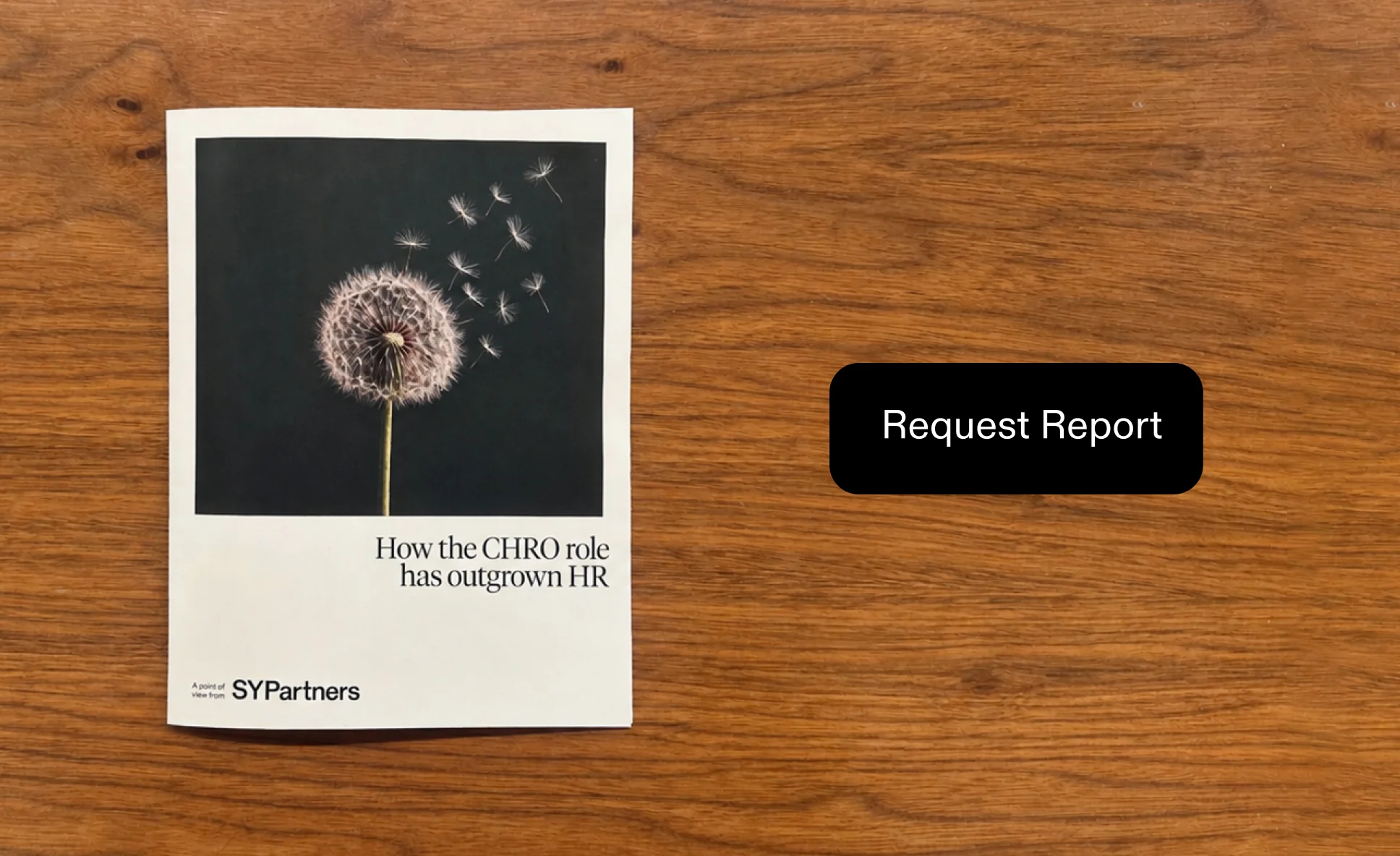
Over the past several years, one workforce upheaval has followed another, repeatedly stretching the CHRO role to meet the moment. Now, as AI raises new questions about human contribution and the future of work, CHROs have an opportunity to move beyond traditional HR and help shape the human systems, capabilities, and culture of the enterprise. Read on, or download the full point of view below.
CHROs have become some of the most resilient leaders in the C-suite, asked again and again to redefine their role in response to major inflection points reshaping the workforce over the past several years: The pandemic. Racial reckoning. The Great Resignation and RTO mandates. DEI backlash.
And now AI.
This wave may be the most disorienting yet because it calls into question the very meaning of the words at the center of the function: human resources.
It's no wonder that many CHROs we've spoken to are considering whether to throw in the towel. The role has become the landing place for every unresolved human question inside the enterprise. While the remit keeps expanding, the authority, resources, and shared accountability have not necessarily followed.
Yet, in this moment, when the value of human contribution is being questioned, and when work and what it means to be a worker are transforming before our eyes, the CHRO has never been more essential.
Four dimensions of the evolving CHRO role
Many HR departments are still structured to deliver programs, processes, policies, and services. But the business now needs something more, and different: a People function that can shape the future of the enterprise.
The need for CHROs to advance enterprise design in the AI era points to four dimensions for their evolving role. Their relative emphasis will vary, but CHROs must hold all four.

1. Human Advantage: Developing the human capabilities that create distinctive value
As intelligence becomes increasingly abundant, organizations need a sharper understanding of where human contribution makes the difference, and how to strengthen it.
The CHRO helps the enterprise identify and develop those capabilities, connecting them to the organization’s strategy and sources of advantage. Broad claims about creativity, empathy, and judgment need to become specific: What kinds of creativity create value? When is it worth slowing down to build understanding? Whose judgment matters, and in which situations?
This also means creating new conditions for capability building. As AI takes on work that used to help build skills, CHROs must help create new pathways to build mastery.

2. Work Architecture: Structuring work across people and AI
Most organizations will be tempted to bolt AI onto old ways of working. Yet AI changes what work needs to be done, who or what does it, and how the pieces fit together.
The CHRO partners with technology, strategy, operations, and business leaders to reimagine the system of work: which tasks to automate, where people and AI should work together, and how roles and workflows need to change. Together, they define decision rights, handoffs, and accountability—including what managers manage when work spans employees, contractors, and AI agents.

3. Trust: Establishing the principles and protections for responsible AI use
AI gives organizations new power to observe, assess, and influence their employees. Human employees will want to know: Is AI being used with me, for me, or on me? If people experience AI as a hidden system of monitoring or judgment, trust will erode. If they experience it as a source of support and learning, trust can grow.
Working with legal, technology, and business leaders, the CHRO establishes the principles that make AI adoption legitimate and humane. This includes how employee data is used, how bias is addressed, where human oversight is required, and how people can challenge an outcome.

4. Habit Design: Turning cultural aspirations into everyday practices
Values and leadership expectations become culture through what people repeatedly do. AI introduces new possibilities for embedding coaching and feedback into everyday work. A manager can be prompted to make their observations more specific. A team can build a routine of challenging assumptions before a decision. Leaders can receive timely signals about whether their actions match their intentions.
The CHRO identifies the behaviors that matter most and aligns incentives, feedback, and tools to make them more concrete. The task includes deciding where technology helps and where conversation, practice, and human modeling are essential. The ambition is to help people build the right habits without reducing them to programmable units.
What it will take to meet this moment
As enterprise designers who focus on transforming the human system of the organization, the next-generation CHRO will be asked to define human advantage, redesign work, protect trust, and shape behavior at scale—often all at once.
But to do any of this successfully, they need the backing of their CEO, partnership from their C-suite peers, and a People team that has the mindset and capabilities to take on these expanded responsibilities. The most important moves are:
A. Name the new mandate of the People function
Despite new demands being made on it, the formal mandate of the People function still reads like a functional plan: talent, performance, learning, engagement, rewards, and compliance.
The first move is to galvanize the People function in defining its new mandate, answering:
- What does the business need us to make possible?
- How must our priorities change?
- What capabilities and capacity must we build within the People team?
- What must we stop, simplify, or deliver differently to make room?
Without this clarity, CHROs will continue to absorb complexity without the authority, alignment, or resources to transform it.
B. Align the C-suite around a shared change agenda
The CHRO cannot redesign the human system while technology, finance, operations, and business leaders pursue disconnected versions of transformation. The executive team needs a shared view of what AI should make possible for the business and how work and human capability must evolve to deliver it.
This requires explicit choices about outcomes, investment, and responsibility:
- What is the shared vision we hold for the future of this organization, with AI in it?
- What outcomes are we pursuing, and how will we weigh efficiency, growth, and the development of future capabilities?
- Which decisions will we make together, and how will we hold each other accountable?
The test of alignment is whether leaders make different decisions as a result: what they fund, how they prioritize, and where they collaborate.
C. Surface the human system
Most organizations understand their formal structures better than their human systems. They can point to the org chart, the operating model, the process map, and the technology stack. But they often have a much less precise understanding of how work actually happens: where trust is strong or brittle, where decision rights are unclear, and where managers are helping or hindering.
In the AI era, these blind spots become dangerous. AI will not enter a neutral system. It will amplify whatever is already there. Before organizations redesign work, they need to understand the human system they are redesigning, and ask:
- Where do human capabilities make the greatest difference when it comes to performance?
- Where do unclear decisions, fragmented workflows, or management practices get in the way?
- Where is trust strong enough to support experimentation, and where does it need attention?
- Which intervention would create meaningful value and help us learn how to proceed?
Once you understand the system, creating a map of how everything interacts can help focus attention on what needs urgent redesigning.
Go farther, together
Organizations that thrive in this next era will be the ones that stop treating the People function as a service provider and start treating it as a transformation engine. CHROs need real decision-making authority to shape that transformation, alongside C-suite colleagues who share responsibility for the human system of the business. Together, they can build an enterprise as ambitious about developing human capability as it is about advancing its technology.
This article is an abridged version of a paper that emerged largely from informed conversations and encounters with CHROs across the SYPartners network. These discussions explored how AI is reshaping work, value creation, and organizational performance, and how those changes are redefining what’s required of leaders. The perspective is also informed by our ongoing signal gathering, client work, and internal reflection.
More MOMENTUM
The CHRO role has outgrown HR
The CHRO role has expanded with every new disruption to the workforce. As expectations continue to grow, CHROs have an opportunity to move beyond traditional HR and shape the human systems, capabilities, and culture that will carry the enterprise forward.


The hive imperative: Why experience design is a business strategy
In periods of rapid change, organizations need more than efficiency to adapt and perform. Experience design builds trust, strengthens collaboration and helps teams align around a shared vision, creating the collective capacity required for lasting transformation.