Designing for humanity: Do we need a new design frame?


Design has long focused on serving users, but today’s global challenges demand a broader lens. This article examines why human-centered and inclusive design frameworks may no longer be enough, and invites designers to consider new approaches capable of addressing complexity, interdependence, and impact at planetary scale.
Design, at its heart, is an act of service—the work of solving problems for the benefit of others. It follows, then, that the frameworks we have used in the design process have centered around those we aim to serve. Universal design. User-centered design. Human-centered design. Inclusive design. These frameworks are all organized around the question, “For whom are we designing?”
It’s interesting how the evolution of these frameworks has loosely followed a trajectory. If human-centered design placed the person or user at the center of the design process, then inclusive design began to broaden the conversation. Instead of asking, “How can we solve this person’s problem?” we began to ask, “How can we solve this problem for a range of different people, all at once?”
These frameworks have helped us unlock solutions in a growing spectrum of areas, from kitchen tools to education to health care. But our most complex challenges require something more comprehensive than our existing frameworks. Climate change. Migration. Food distribution. Bigotry. Inequality. Human-centered design—placing a single person or group of people at the heart of our process—will not solve problems that affect all of our lives in so many ways.
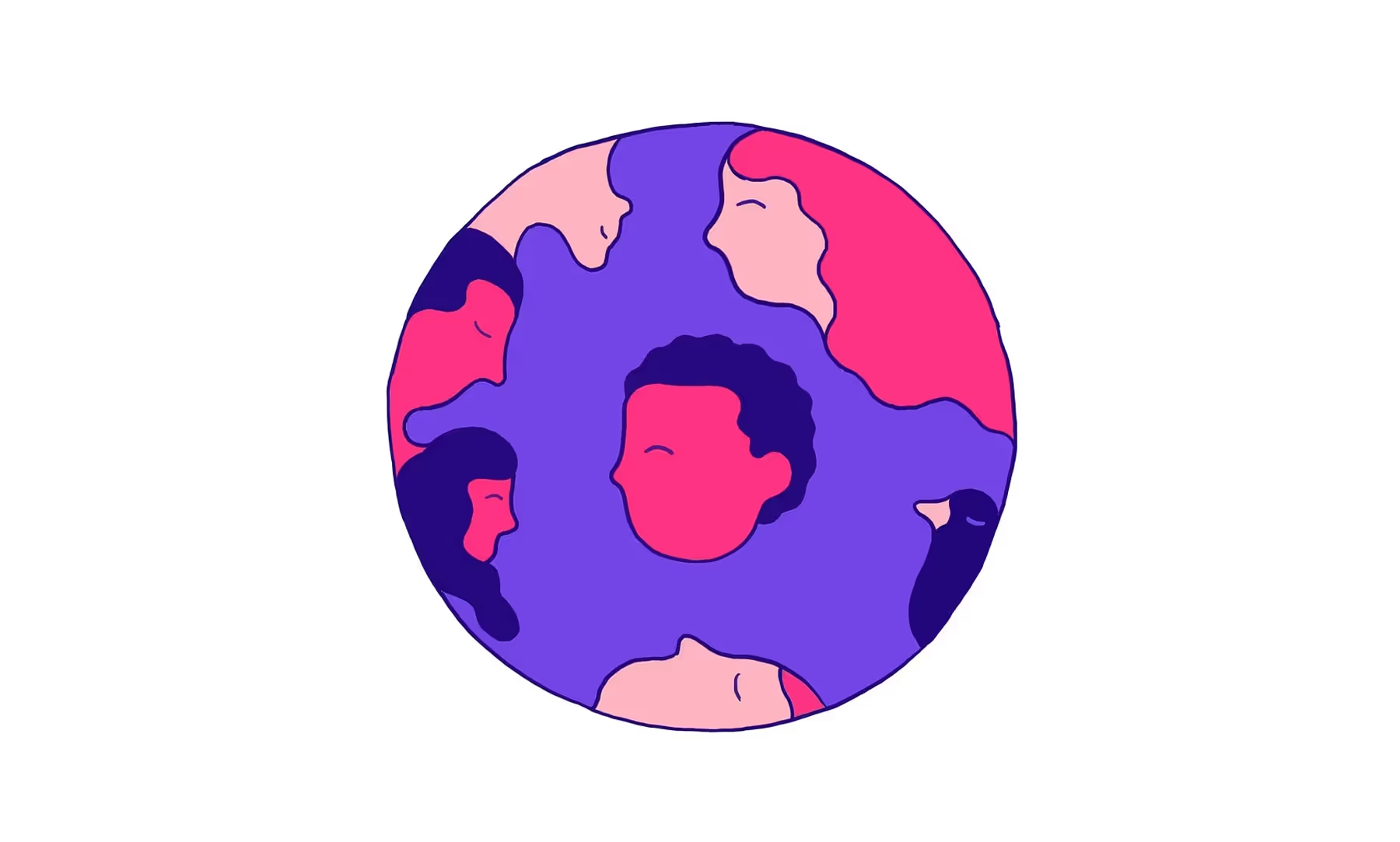
How do we design for problems that exist on a global scale? Where “everyone” is our end user? Where we have taken into consideration all dependencies and externalities of our work and how it impacts our living system—spaceship earth, as Buckminster Fuller called it? How do we design for not just one element of one person’s experience, but the full complexity of each person? And their relationships with each other, and the world? It’s a tall order, but the urgency of our greatest challenges demands it. The good news is, the technology and data we have today enable us to approach these questions in ways we’ve never been able to before.
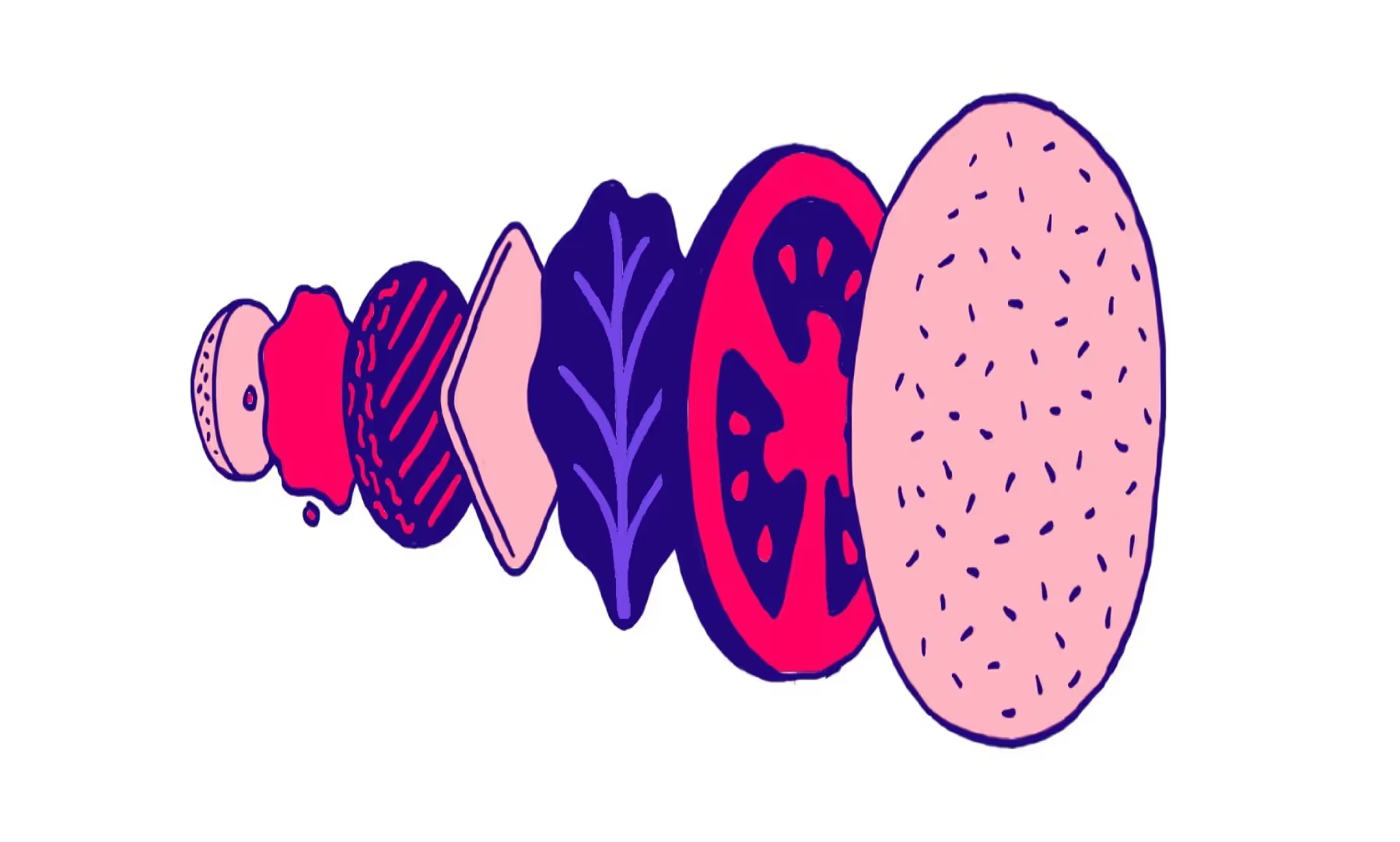
Consider how we might reimagine feeding the world on a massive scale, as Impossible Foods is doing by using science to create foods we love with far less negative impact on our ecosystem. Or how we might make high-quality diagnoses of disease more accessible to a larger population, as IBM’s Watson could do. It’s never been more possible to understand and transform our impact on the world. And we’re not just limited to analyzing the physical aspects of design.
The fields of behavior and neuroscience help us navigate the mind which, among many things, enables us to understand our biases and how they affect our work. Have you ever wondered: Why are virtual assistants, such as Siri and Alexa, associated with women? What do failures in facial recognition technology across ethnicities reflect about the design process?

As daunting as it may be to tackle such problems, I believe there is no better calling for a designer. Our training in always asking “why?”, in seeing connections, and prototyping our way toward solutions that are both functional and deliver impact. So this is my invitation to designers of all kinds: It’s time for a conversation about what design framework would be comprehensive enough to address problems at this scale, what new methods, language, and measurements are required, and how this can help us get started on making a bigger impact today. Humanity’s challenges are at massive scale, yes—but design can, and should, be able to get us started now.
I am exploring this in a podcast called Designing for Humanity. Humanity is an interesting word. It can mean the sum of all people, but also a specific virtue—a quality of compassion that is essentially human and makes us the best version of ourselves. Humanity means all of us, and the best in us. We must find a way to design for both. I hope you’ll join me and my guests as we dive into topics such as inclusion in tech, accessibility in products and fashion, intention and bias, designing systems fit for the future, and so much more.
More MOMENTUM
Beyond purpose: Unlocking the true potential of cultural organizations
Purpose gives cultural organizations meaning, but it does not guarantee impact. Many struggle to translate noble intent into resilient ways of working. This article explores why organizational design, human systems, and co-creation are essential to embedding purpose and unlocking sustainable cultural transformation.




Values: From corporate fluff to strategic asset
Nearly every organization has a set of stated values, yet few use them as a true strategic asset. Too often, values become generic and interchangeable, guiding behavior in theory but not in practice. This article explores how values can move beyond “corporate fluff” to become distinctive, actionable commitments that shape decisions, culture, and long-term impact.