Beyond purpose: Unlocking the true potential of cultural organizations


Purpose gives cultural organizations meaning, but it does not guarantee impact. Many struggle to translate noble intent into resilient ways of working. This article explores why organizational design, human systems, and co-creation are essential to embedding purpose and unlocking sustainable cultural transformation.
To achieve great things, we need great organizations. This holds true in business, society, and culture. A great organization requires more than a compelling idea, a noble purpose, or even an inspiring leader. Unfortunately, corporate organizations seem to understand this better than cultural organizations.
The challenge for cultural organizations
Cultural organizations have always understood the societal impact of their work. Purpose is not the issue. Their challenge lies in an overreliance on purpose. While many businesses have spent the past decade discovering deeper meaning in their purpose and striving for global contribution and societal relevance, cultural organizations must take the opposite approach: They need to embed their purpose within a consciously designed organizational fabric.
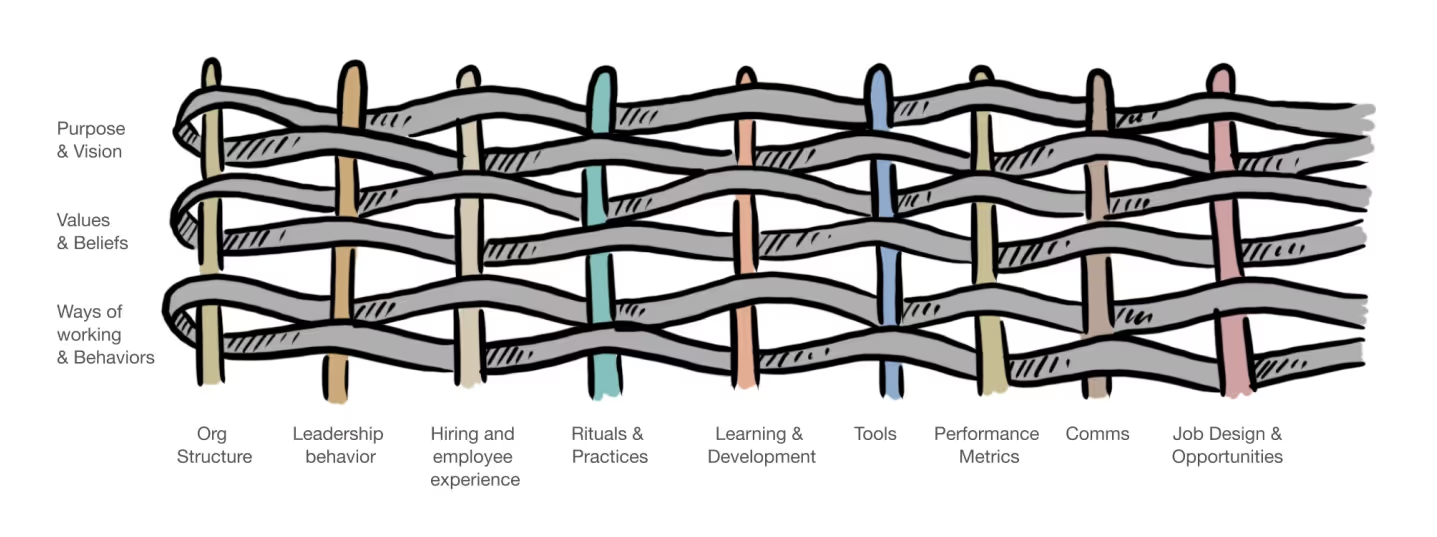
A noble intention, no matter how inspiring, cannot thrive without the right organizational foundation. This foundation consists of the multidimensional artifacts, rituals, and human systems that must be thoughtfully curated to support that purpose. This is particularly crucial for cultural organizations, which operate in highly pressured, competitive, and challenging environments, despite their noncommercial agendas.
Addressing the disconnect
The disconnect in cultural organizations often stems from two challenges: a lack of urgency or interest in addressing the deeper layers of organizational culture, and mistaking cultural challenges for mere systems issues, without accounting for the nuanced human condition and the artistic endeavors underpinning their work. Scaling impact at the cultural level isn’t about mass-producing products. It requires scaling networks, relationships, emotions, concepts, experiences, and conversations.
Moving beyond systems
While systems, structures, programs, and decisions bring purpose and vision to life, organizational charts and mandate descriptions fail to capture the lived experiences of the individuals within an organization—people with their own hopes, fears, and dreams. Any organizational design or transformation process must deeply consider the human moment its people inhabit. Ironically, if more consultants understood and appreciated the artistic nature of organizational design, cultural organizations might find themselves more at home with like-minded, thoughtful partners.
The art and science of transformation
Good organizational building and transformation require a delicate balance of art and science. It is part idea generation, part systems building, and part human-centered design. This process weaves a multidimensional fabric that transforms abstract notions into embodied practices embraced by employees. Simply put, a successful transformation strategy resonates with those who enact it. Without this fabric, even purpose-driven organizations risk becoming dysfunctional, inefficient, and reactive. Over time, this dysfunction reinforces deeply rooted behaviors that limit the organization’s potential. The most critical element of success, regardless of the model or creative solution applied, is genuine co-creation. When internal teams lead the process, the results are not only more relevant but also more enduring. Without this approach, even the most innovative solutions risk falling short.
A way forward
If purpose alone cannot sustain an organization, and traditional organizational design methods fall short, how can we best support cultural organizations in scaling their impact? Cultural organizations, more than any other, demand nuanced and original thinking to develop solutions that are meaningful and aligned with their unique people and context. These solutions cannot be benchmarked or borrowed—they must be discovered and nurtured from within. The real opportunity lies in inspiring new perspectives, unlocking imagined futures, and designing ways of working that resonate deeply with the core of the organization and its people.
More MOMENTUM
Beyond purpose: Unlocking the true potential of cultural organizations
Purpose gives cultural organizations meaning, but it does not guarantee impact. Many struggle to translate noble intent into resilient ways of working. This article explores why organizational design, human systems, and co-creation are essential to embedding purpose and unlocking sustainable cultural transformation.
Values: From corporate fluff to strategic asset
Nearly every organization has a set of stated values, yet few use them as a true strategic asset. Too often, values become generic and interchangeable, guiding behavior in theory but not in practice. This article explores how values can move beyond “corporate fluff” to become distinctive, actionable commitments that shape decisions, culture, and long-term impact.