Digital transformation: How to get unstuck



Digital transformation rarely fails because of technology. More often, organizations get stuck on the human side of change. Drawing on insights from senior leaders, this article explores how culture, leadership behaviors and new ways of working can help companies move faster, adapt continuously and unlock lasting transformation.
Digital transformation means a lot of different things to different people. But what we’ve found is that while the conversation often veers toward technology, technology is rarely the sticking point. The real challenge is that there’s not enough focus on the human element—the people leading the change in an organization. At SYPartners, we believe that transformation, digital or otherwise, is an ongoing pursuit—not an end game. As technology and the world continue to transform at an increasing pace, organizations need to build cultures that can constantly transform, too.
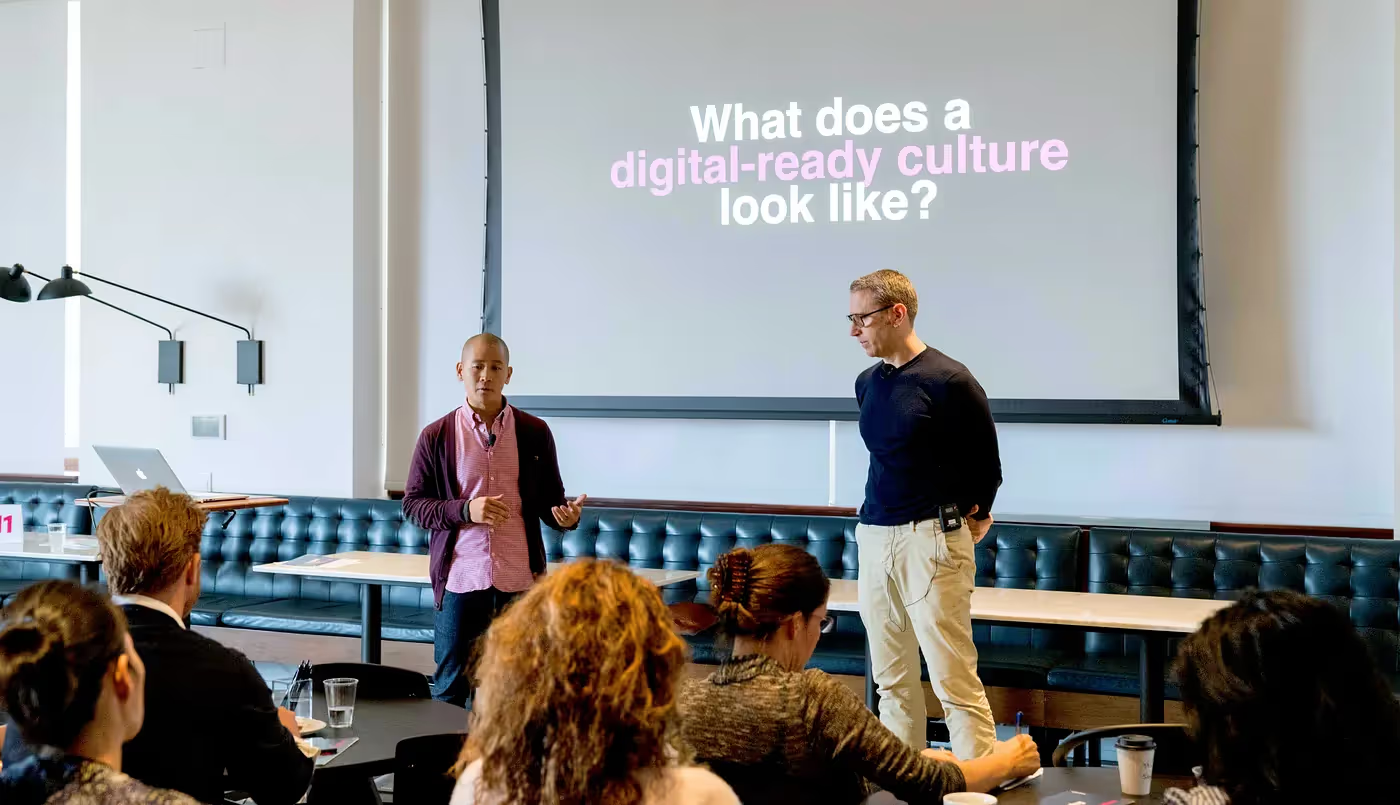
80 leaders joined us recently at our office in New York (as part of the Fast Company Innovation Festival) to investigate what it takes for a culture to thrive in today’s digital world, and discuss what gets in the way and how to get unstuck. Here is what we learned:
Four attributes of a digital-ready culture
et’s start with the context: Digital transforms everything. It sparks new business models (e.g., Uber upended the taxi business by connecting people through their smartphones). It radicalizes our notions of speed and scale (e.g., in its first four years, Airbnb built the world’s largest hotel inventory across 89 countries, as compared to the several decades it took major hotel chains to do the same).
Digital transforms how companies create value (consider: the top five U.S. companies by market cap are all tech giants). And of course, digital transforms consumer expectations (Shouldn’t everything—from my banking experience to my thermostat—be beautifully designed, highly engaging, fast and convenient?).
All of these shifts have implications for how people and organizations must operate. And while each digital transformation is unique to the company undertaking it, we’ve found a common set of attributes that characterize a digital-ready culture:
- Collective speed: Your culture has a bias for action—with everyone working in short, iterative loops; prototyping ideas rather than talking them to death; and constantly improving decision-making. Speed has always been important. The difference is that today’s accelerated pace of change means speed can’t be the domain of just one team or function. Multifunctional groups, and even the entire organization, must be able to act quickly.
- Restless ingenuity: Your culture weds resourcefulness with creativity. “Why not?” is the rallying cry, inspiring people to continually challenge assumptions and uncover fresh thinking. The need for creative thinking has often been reserved for a specific time, place or group (e.g., innovation teams, skunkworks or a tight budget). Today, product cycles have never been shorter. New technology is released every quarter. Ingenuity can no longer be the purview of a few or an indulgence that is calendared.
- Deep agency: In your culture, people are clear on their goals and have authority to make the decisions required to achieve them. Agency is essential to getting stuff done. Traditionally, that agency has been concentrated at the top, driving decisions down through the organization. In today’s environment, it’s no longer sufficient to have the few dictate to the many. Organizations that don’t embed agency deep into the organization don’t have the ability to nimbly adapt, pivot or seize new opportunities.
- Radical collaboration: Your culture believes the best outcomes emerge from mashups of diverse skill sets and perspectives. Tribalism and silos take a backseat to more fluid, cross-functional ways of working. In an era of disruption, collaboration isn’t just about working well together within your team. It’s about tapping the collective expertise and capability of the organization (and beyond) to generate breakthrough ideas, tackle big problems fast and anticipate what others couldn’t. After all, if you want your brand to show up seamlessly to customers, you’re going to have to figure out how to be seamless inside, too.
So, what gets in the way of building a culture that’s fast, creative, empowered and collaborative?
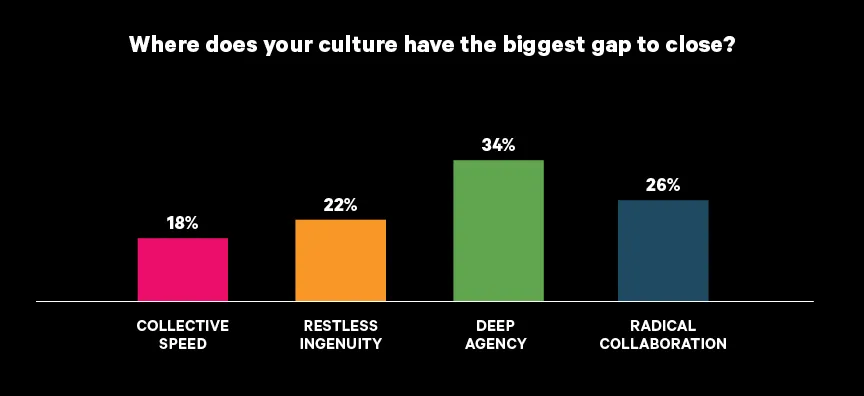
When reflecting on their cultures against these four attributes, one-third of the leaders at our workshop said deep agency was what their culture most needed to work on. But perhaps what’s most interesting is what’s behind their answers. Some themes emerged across all four attributes when leaders elaborated on their responses.
Fear
For a group of leaders interested in trying new things and pushing the boundaries (they signed up for an innovation festival, after all), it’s clear that fear is a barrier in many of their organizations. Leaders shared concerns related to everything from fear of failure and not being perfect, to fear of change altogether, with statements such as: “People got used to hearing ‘no’ or ‘that can’t happen.’ They’re afraid to ask questions,” “There’s no appetite to do new things, or even old things in new ways,” and “We’re afraid of pushing things out too soon.”
As senior leaders look to transform their culture, this means mitigating fear is an important consideration, and it’s worth asking:
- How might we encourage rapid prototyping so we can test and learn what works and what doesn’t more quickly and iteratively?
- How might we create more opportunities for open dialogue, so employees can voice questions and concerns and work toward solutions together?
- How might we celebrate what’s learned from failure instead of stigmatizing it?
Silos and ego
In any group of people, at work or otherwise, it’s hard to prevent silos from forming. Groups are how people bond and how work gets done. But as leaders expressed, the silos that crop up between functions—and even between leadership and everyone else—prevent the speed, ingenuity, agency and collaboration that are so critical today.
Sentiments like these were common among the group, and likely don’t feel foreign for many organizations: “Even in integrated teams, work gets siloed in functions, slowing us down,” and “Goals are closely held at the top, so it’s difficult to promote agency when few people have all the information needed.”
As a leader, ask yourself:
- How might we engineer new and more frequent interactions across functions (e.g., consider how teams are staffed, where teams sit and how work gets shared)?
- How might we recognize and reward collaboration over individual performance?
- How might we shift our behaviors as a leadership team to promote and model more cross-functional collaboration down through our respective functions?
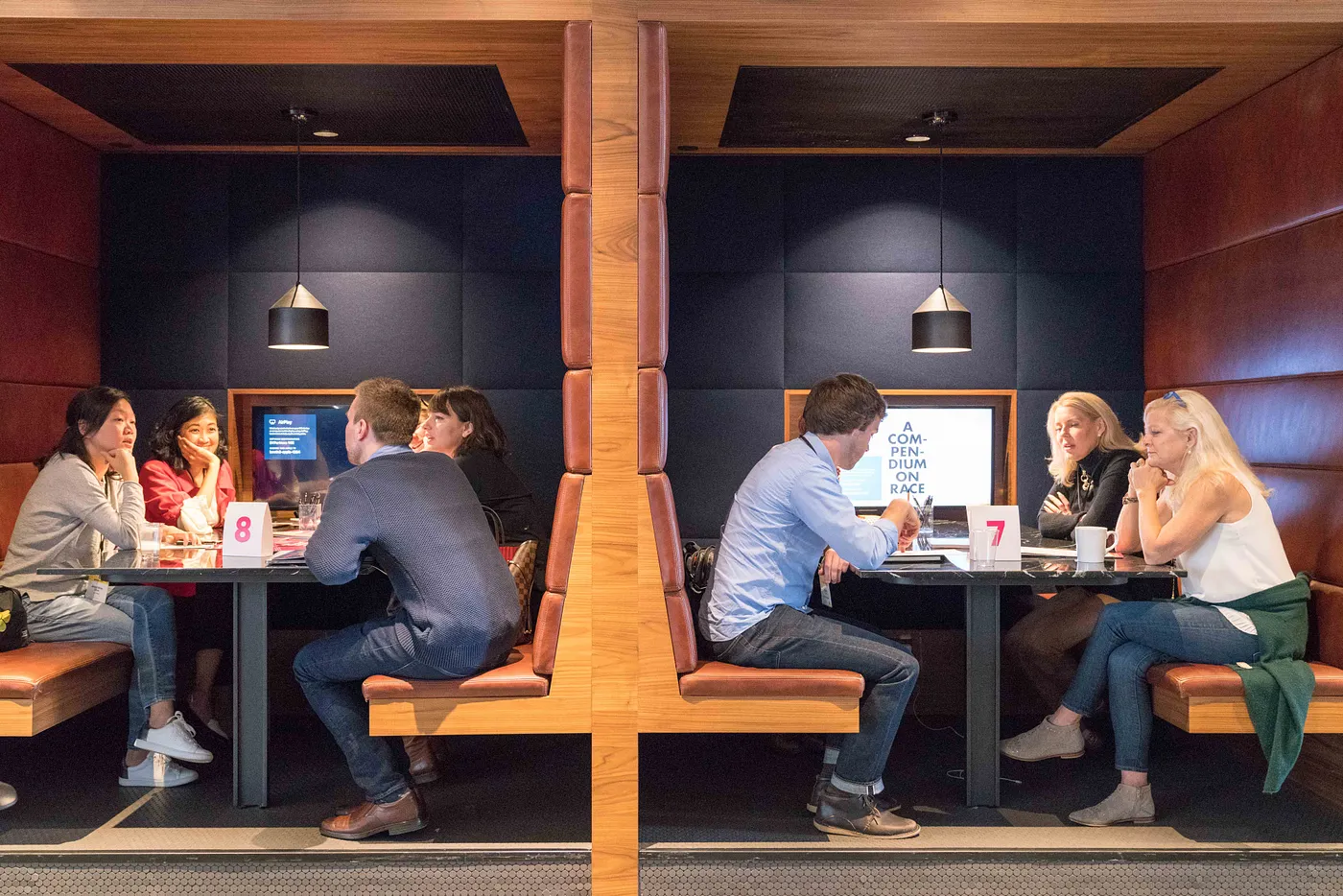
Culture can feel ambiguous—all encompassing and yet elusive. And that makes it hard to change. One starting point is through rituals: recurring acts that disrupt old patterns to shape new behaviors. Read more about building rituals in Fast Company’s article about our workshop.
And for a broader look at digital transformation, read our point of view on four critical steps leaders should take—from defining vision all the way to shaping culture.
More MOMENTUM
The CHRO role has outgrown HR
The CHRO role has expanded with every new disruption to the workforce. As expectations continue to grow, CHROs have an opportunity to move beyond traditional HR and shape the human systems, capabilities, and culture that will carry the enterprise forward.




The hive imperative: Why experience design is a business strategy
In periods of rapid change, organizations need more than efficiency to adapt and perform. Experience design builds trust, strengthens collaboration and helps teams align around a shared vision, creating the collective capacity required for lasting transformation.